

BBC highlights working conditions in Kenya’s flower industry
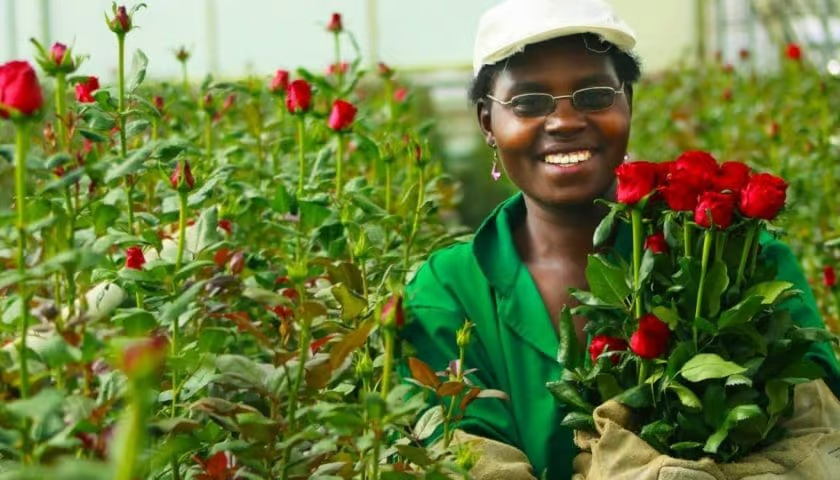
KENYA – A recent article featured by BBC sheds light on the challenging working conditions faced by flower farm workers in Kenya.
The report focuses on the experiences of Anne, a single mother from Naivasha, who represents the struggles of many women employed in this sector.
Anne has worked in the Kenyan flower industry for over 15 years, waking up each morning before dawn to begin her long journey to the farms.
“You have to enter into debt to survive,” she explains, revealing her monthly earnings of just over USD 100 leave her struggling to meet basic needs. As the cost of living rises, Anne often skips meals to make ends meet.
She starts work at 7:30 AM, six days a week. Although her shift is officially eight hours, Anne frequently works an additional three hours without receiving overtime pay.
“If you don’t achieve your target, maybe you can be thrown out,” she shares, indicating the pressure to meet demanding production goals.
The article also addresses the health risks faced by workers like Anne. She recalls a time when she fell ill with a serious blood condition but was pressured to return to work after only one day off.
“It felt bad because I was still sick,” she says, highlighting the lack of support for employees facing health challenges.
Another flower picker, Margaret, expresses concerns about the chemicals used on the farms. She claims workers often spray hazardous pesticides without proper protective gear.
“They shout to the men, they shout to the women,” Margaret notes, emphasizing the lack of respect for workers’ safety.
A report in September 2023 by the Nairobi-based NGO, Route To Food Initiative, showed that highly hazardous pesticides are routinely used in Kenyan farming, some known to cause cancer.
The pesticide market in Kenya has grown significantly, raising concerns about the harmful effects of registered pesticides on human health and the environment.
Pesticide residues exceeding limits have been found in Kenyan food, particularly in tomatoes and kale. Limited progress in implementing stricter regulations and phasing out toxic pesticides has raised concerns about food safety and environmental impact.
Accurate usage data is crucial to support the phasing out of Highly Hazardous Pesticides (HHPs) in Kenya. However, official data on national pesticide use is not publicly available.
To address this gap, the Route to Food Initiative (RTFI), a program of the Heinrich Böll Foundation in Kenya, obtained a pesticide dataset from a private market research company.
This analysis focuses on HHPs and provides insights into the most commonly used and toxic pesticides, as well as the crops and companies involved.
This data underscores the need for immediate regulatory attention to prioritize substances that pose risks to human health and the environment.
During 2020, farmers in Kenya used 310 pesticide products containing 151 active ingredients, applying 3,068 tonnes to control pests on 26 different crops. Farmers spent USD 72.7 million on these products, with USD 28.2 million on insecticides, USD 26.4 million on herbicides, and USD 18.1 million on fungicides.
Out of the 310 products used, 195 (63%) contained HHPs, accounting for 76% of the total volume. Almost half (44%) of the total volume of pesticides used are already banned in Europe due to unacceptable risks to health and the environment.
The production of flowers for export poses environmental challenges, relying heavily on water and fuel-intensive shipping methods.
Kenya supplies over 40% of Europe’s flower market, with the majority sent to the Netherlands for distribution.
Consumers in Europe purchase these flowers without knowing the backstory of the workers who cultivate them. Despite the difficulties, Anne remains committed to her job, fearing the lack of opportunities in Naivasha.
“If God helps me,” she says, “I will move on,” reflecting her resilience and hope for a better future.
The BBC article critically examines the realities of the flower industry in Kenya, highlighting the need for improved working conditions and greater awareness of the people behind the flowers that adorn homes across Europe.
Sign up to receive our email newsletters with the latest news updates and insights from Africa and the World HERE.


Be the first to leave a comment